| |
An examination of
the recent work of John Howes.
Nigel Williams BA(Hons) PGCE(FE)
An examination of the recent work of John Howes.
"And God said, 'Let us make man in our image, after our likeness: and let them have dominion over the fish of the sea, and over the fowl of the air, and over the cattle, and over all the Earth, and over every creeping thing that creepeth upon the Earth.'"
Book of Genesis
In this essay I will examine the recent work of artist John Howes and discuss the importance of the influence of appropriate artists and movements, along with the processes of documentation as the underlying inspiration and motivation for this work.
In November 2002 John Howes presented his recent work in a solo exhibition at Oriel Lliw in Pontardawe, Swansea. This exhibition was entitled "Registering the Land" and was opened by Dr Anne Price-Owen. The exhibition was also accompanied by essays written by Shelagh Hourahane and
Robert Newell
. Shelagh Hourahane is free-lance writer, researcher, artist and lecturer. Robert Newell a senior lecturer in the Fine Art department at Swansea Institute of Higher Education. Although these essays approached the subject from different stand points, they provide excellent background information and avenues for further research.
I have obtained copies of the essays and a transcript of Dr Anne Price-Owen's opening speech, and these documents form some of the exhibition specific research and analysis and are included in the appendix attached. Other sources have been taken from relevant literature.
John Howes is an artist, designer, musician lecturer and farmer and has lived with his wife
Adrienne
, a painter, on the Gwrhyd Mountain in Pontardawe for the last thirty years. Most of his recent work has been inspired by their 70 acre Blaen egel farm. In 1996, having paid off the mortgage, they received a parcel through the post from the building society enclosing the title deeds to their land. This then became the inspiration for the exhibition "Registering the Land" which explores the processes of management, representation and documentation of the agricultural landscape (1).
"Human tampering with the natural world has made Earth itself an artefact, for the process of civilization has been one of domesticating environments'"
(2).
Many artists have used the land as a source of inspiration for their work, from the English landscape painting traditions of Constable, Turner, Palmer, Wilson and Gainsborough and the French Impressionists Monet, Cezanne, Van Gogh, amongst others, to the more recent natural (and acceptably contemporary) constructions of Andy Goldsworthy and the documented walks of Richard Long. Indeed, it could also be argued that landscape painting remains the most popular genre with the masses within the United Kingdom. John Howes however, sets about to provide us with an insight to his personal links with a specific area of land to which he feels an obligation of responsibility. This he does by presenting a collection of apparently disparate individual elements within the confines of a gallery, which are all linked through a specific sense of place. Artist Shelagh Hourahane relates to Howes' methods of working and documentation. In her essay for the exhibition catalogue of "Registering the Land" she explains her own similar experiences and efforts to connect with a specific place through her art.
"I was driven by a need to identify with the land in which I had come to live and this was, for me, the best way to do so. I found objects that were etched with meaning, of previous farming and domestic life. I pictured individual trees, endless stonewalls and other remnants of ways of living on and of working the land. For me the land is the minutiae that inhabit a place, that mark out its boundaries, point to its history. It is made from the layers of people's lives"
(3).
To begin this essay I consider it necessary to examine some of the literature dealing with the subject of landscape. This examination also, inevitably, required a study of Land Art, a genre I had little interest in prior to this research. I was also able to interview the artist at the exhibition venue to ascertain details of his inspiration and motivation.
Robert Newell states, in his essay in the catalogue for "Registering the Land", that
"the relationship between culture and nature has a specific social dimension in the polarisation of the relationship between urban and rural life and culture"
(4). Newell also observes that the development of a differentiation between 'high art', 'folk art' and 'craft' became a major factor in this polarisation, the cities claiming 'high art' as their own. Land and Environmental Art has addressed some of these issues, in that artists began to work in and on the land and exhibit away from the gallery, but this work has also been appropriated by the
city gallery
. Newell explains that
"Land Art often engages with certain techniques and crafts of land cultivation, revealing dimensions of meaning and association latent within them" (5).
Of course this creates a direct link between High Art and the land, but it is often seen as a process of production of art for the benefit of the established gallery system.
Land art had its origins in and around the American cultural capital of New York during
"the artistic revisions that followed the cultural turbulence and social unrest of the late 1960's" (6).
And although most of the early work was an attempt to remove art from the clinical sterility of the white cube, artists were concerned with the effects of time and natural forces on objects and gestures, the results were often sculptural
(7).
The sixties was a time of awakening of ecological and feminist consciousness and a desire to return to a natural and holistic way of life, an escape from the capitalist rat race. Land Art provided artists with a means to escape
"the cult of personalized, [sic] transcendental expression embodied in American post-war abstraction" (8).
Artists began to engage with the landscape, rather than represent it in paint
(9)
. John Beardsley, in his book
Earthworks and Beyond
, also points out that the land artist's involvement with the landscape is often site specific, illuminating and exploiting relationships with the characteristics of the place. This is certainly the case with the work of John Howes. Everything within the exhibition is inextricably linked to Howes' sense of place at Blaen egel. Upon entering the exhibition at the Oriel Lliw in Pontardawe one immediately encounters the source of inspiration for the exhibition, a parcel containing the title deeds to Blaen egel farm. Price-Owen, in her speech at the opening of the exhibition, suggests that this theme of parcels then continues throughout the show, indeed even the exhibition space naturally affords the exploitation of this, being split into three distinct areas
(10)
. This is perhaps no coincidence or happy accident. Howes explains that the process of assembling the work suggested a museum-like arrangement for display. He was concerned with presenting the separate sections "as a matter of fact"
(11)
. It is this almost clinical manner of display that perhaps reflects his initial career influences as a graphic designer, the work being immaculately presented. Each of the three areas has been thoughtfully addressed, as Price-Owen suggests,
"the space is a tricky one to contend with, and it is to Howes' credit that he creates such a coherent display"
(12)
. And indeed, Howes states that in some cases the areas have suggested the manner of display of some of the exhibits. Howes' response to the gallery is an example of an artist being able to react to specific issues of space and to be able to exploit these problems to inspire solutions that enhance the work, rather than detract from it.
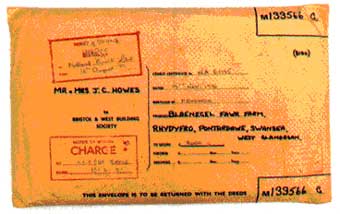
(Fig i) "Land Parcel" Installation by John Howes
The parcel
(Fig i)
which contains the deeds to the land, is encased in glass, which suggests its importance to the artist, both inspirationally and financially. Price-Owen suggests that the encased parcel echoes Damien Hirst's work -
"The Physical Impossibility of Death in the Mind of Someone Living" (the shark in formaldehyde)
and that this preservation is part of the wider theme of conservation running through the exhibition, and this is in keeping with the overall museum atmosphere of the exhibition
(13)
. There is nothing really left to chance. Everything within the exhibition has its place. The viewer is actively engaged, and from the first instance is manipulated and presented with the first of many clues into the motivation of the artist. Also, within this first central space is a small wall hanging of broken pottery
("Broken Hearth Bones")
and other found objects which are hung adjacent to an entry from the 1851 census for Blaen egel farm. Once again we are presented with the impression of a museum exhibit. Everyday objects have been removed from their everyday status and presented as a display on a wall in a gallery, elevating each to a position of reverence. But these objects are still simply the collected detritus of those people who tended the land before the artist's time. Each of the found objects, a broken clay pipe, a piece of cloth etc, has been lovingly displayed within its own square wood and glass mausoleum and takes on a new meaning within the gallery context. Many of the land artists of the 1960's wanted to avoid this process of elevation, but Howes is an educated realist, he is aware of the connotations and historical significance of the exhibits and also of the manner of exhibition and exploits these issues to best advantage.
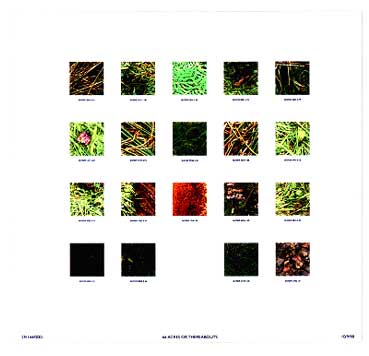
(Fig ii) "66 Acres or Thereabouts" - inkjet print on paper 20" x 20" set of four by John Howes
Many of the works are presented in a square format, some of these squares being divided into further smaller squares (see Fig ii above). Howes explains,
"The square is predominant, a unit of measurement. It's something that features within the system of registry" (14)
. Land is often recorded by the 'square-foot', the 'square-yard', 'square-mile' or now even the 'square-metre' and all the various gradations associated with the change to the metric system of measurement. However, the square also suggests discipline, an element of precise control, often necessary to successfully tend large tracts of land for agricultural use, as in the case of crop rotation or the division of land for a variety of purposes. This unit of measurement therefore follows into the work on display. However, in contrast to this suggestion of precision is the title,
"66 Acres or Thereabouts"
ironically reveals the contrary, that land registry is never quite that accurate. The sods of earth scanned and presented as four separate boards for each of the seasons within "66 Acres" were cut into small squares from the centre of the grid reference of each section of land. Howes is keen to allow the work to speak for itself, but he is also aware of the inevitable influence and decision making process that is necessary to present any form of art work. The American Abstract Expressionist painter Jackson Pollock (1912-56), in his series of drip paintings, attempted to remove the conscious elements of decision making from his process of painting in pursuit of the idea of 'pure painting.' He though this was, at least in someway possible, by dripping the paint onto the canvas without the brush making contact. He felt that this spontaneity allowed the paint to find its own way within the set dimensions of the painting. Pollock's earlier experience of Surrealism and Native American sand paintings seemingly lead towards a form of automatism within the works. However, this is never truly achievable. Even by selecting or positioning paints for his work, defining the area and method or process of delivery negates the very concept
(15)
. Although Howes also wished to remove the influence of his artistic training from the process of selecting the sods of land for this piece, leaving the selection process to the predefined grid reference, he was also aware that his decision to choose grid reference points had already coloured this process. He also admits to making slight deviations from his plan, on occasions, where his formal training demanded aesthetic enhancement.
Howes states that his influences include Cornelia Parker, Peter Greenaway, Richard Long and Iain Hamilton Finley. Some of these influences are easier to detect than others. Links to the work of Cornelia Parker can be made on a number of levels.
"Parker is not producing discrete objects relating to separate individual ideas, but instead creates work generically, alighting upon the particular" (16)
. This process of working can also be found within Howes' work "Registering the Land". Both artists create layers of meaning, eroding the practical essence of objects by implanting sometimes ambiguous dualities. But where Parker tends to include an obvious sense of humour and irony, Howes presents his work in an altogether serious and somewhat sober manner. Indeed there are also examples of specific similarities within their work. In 1995 Parker also presented a glass display case, entitled
"The Maybe"
, occupied by actress Matilda Swinton at the Serpentine Gallery in London. Although this formed just a small part of the exhibition, the sleeping actress became the centre of most criticism and media focus
(17)
. Hirst's shark in formaldehyde produced similar reviews. However, Howes also uses this method of engagement to set the stage for the rest of the show.
The practice of documentation is also obvious within Howes' recent work.
"Documentation can be valued as the antithesis of expression. It offers the promise of neutralising subjectivity in order to achieve a more valuable and immediate relationship with its object" (18).
Documentation within art is not new, with perhaps the best known and obvious example being Mary Kelly's
"Post-Partum Document"
. Mary Kelly began collecting and recording personal items and events relating to her relationship with her son in 1973. By 1977 Kelly was able to produce an exhibition of this work in London and, as Lucy Lippard recalls, it was initially seen as
"a 'fetish' - a more or less conventional work of art, visually refined, hung on the wall in pretty plastic boxes" (19)
. Nevertheless, it also relied on several readings
"indicated by the juxtaposition of found objects and commentary with a series of diagrams". (20).
Although it is clear that Howes work deals with land rather than a relationship between a mother and child, the manner in which he treats the found objects and openly accepts responsibility for the land is none the less touching and commendable. Soiled nappies are replaced with the used plastic carrier bags essential to daily farming life. The early childhood mark making and processes of language development substituted with the chance impressions of nature on paper. Kelly's records of feeding and nurturing her son could equally be applied to the manner in which Howes, and those before him, cared for his land. It is this acceptance and acknowledgement of the contribution of others to his sense of place that is recognised within the confines of a small frame containing a record of an earlier occupant. The copy of an 1841 census record illustrates the legacy of responsibility Howes has accepted since taking charge of Blaen egel farm.
Perhaps links to Richard Long and Andy Goldsworthy are easier to identify in this collection of work. Photography (or photographic processes) being a common method of recording work for all three artists. Of course Goldsworthy parts company with Howes on issues of whether to utilise the gallery space or not. Goldsworthy, although not against the gallery per se, prefers the outdoor experience to remain outdoors, the photograph often being the only means to record transitory works. Although Howes has chosen to assemble the work within the Oriel Lliw gallery, it is also clear from images of earlier work that he prefers to remain flexible and to adapt and apply methods of working, and subsequently displaying that work, to suit the needs of expression.
Perhaps Ian Hamilton Finlay's influence is apparent within his constructed image of the classic Albrecht Durer drawing
"The Great Piece of Turf"
(see Fig iii below)
.
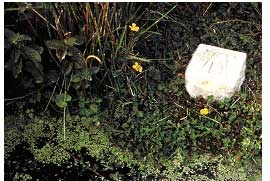
(Fig iii) Ian Hamilton Finlay. "The Great Piece of Turf", at Stonypath, begun 1967.
Stone: 5 x 5 in., overall dimensions: 5 x 2 ft. Lanarks, Scotland.
But perhaps Finlay and Howes also part company with their approach to the subject, Finlay being content to manipulate and display references to the canon of art history within his garden, whilst Howes presents the totality of his place and time within the history of a specific landscape.
Peter Greenaway believes, in contradiction to the views of Newell,
(presented earlier in this essay)
that the vocabulary of landscape
"has been used up"
(21)
. Perhaps it is Greenaway's work which also suggests an influence of constructivism running through his and also, in some ways, the work of Howes. Howes work deals with many problems of the present day and perhaps suggests the prospects for the future. Constructivism deals with tensions invoked by the image of a
New Man
[sic] and perhaps Howes' work best represents the increasing momentum of awareness of environmental issues, of our need to nurture and protect our land. It is truly an art of the past, present and future, and one that could well be considered art for the people and a new society. Perhaps it's wrong to even attempt to read anything in to the work other than that which is apparent, but surely the best works are those that permit the observer to engage in any way considered appropriate, to take from it what they wish. To some, the very conception of an exhibition dealing with a man's relationship with a plot of land may seem insignificant or trifling, especially at times of world unrest, but it is work of this nature that helps us to connect with what is important. The little things that make us the way we are. And, as Ian Hamilton Finlay suggests;
"Grand conceptions are inhuman to small inhuman minds" (22).
REFERENCES
1
Registering the Land
. Exhibition Catalogue December 2002. Not paginated.
2 Peter Goin.
Human Nature
(University of Texas Press. 1996) p.2.
3 Shelagh Hourahane essay in
Registering the Land
. Exhibition Catalogue 2002. Not paginated.
4 Robert Newell essay in
Registering the Land
. Exhibition Catalogue 2002. Not paginated.
5 Ibid.
6 J. Beardsley,
Earthworks and Beyond - Contemporary Art in the Landscape
(New York: Abbeville Press, 1989) p.7.
7 J. Kastner & B. Wallis,
Land & Environmental Art
(London: Phaidon. 1998) p.12.
8 Ibid. p.12.
9 J. Beardsley, op.cit. p.7.
10 Dr. Anne Price-Owen (Transcript of exhibition opening speech. December 2002).
11 John Howes (Transcript of Interview with the artist January 2003).
12 Dr. A. Price-Owen, op.cit.
13 Dr. A. Price-Owen op.cit.
14 John Howes, op.cit.
15 E.H. Gombrich,
The Story of Art
(London: Phaidon, Reprinted edition 1995) pp.602-604.
16 S. Cameron,
Cornelia Parker - Avoided Object
(Cardiff: Chapter. 1996). p.5.
17 Ibid. pp. 5-6.
18 R.Newell, op.cit.
19 M. Kelly
Mary Kelly - Post-Partum Document
(London: Routledge & Kegan Paul. 1983) p.ix.
20 Ibid. p.xvii para 2.
21 Web site, http://www.petergreenaway.net/eng/comments.htlm. p.1.
22 J. Beardsley, op.cit. p.160.
BILIOGRAPHY
Bann. S.,
The Traditions of Constructivism
(London: Thames & Hudson, 1974).
Beardsley. J.,
Earthworks and Beyond - Contemporary Art in the Landscape.
New York: Abbeyville Press. 1989).
Cameron. S., et al,
Cornelia Parker - Avoided Object
(Cardiff: Chapter: 1996).
Goin. P.,
Humanature
. (Texas: University of Texas Press. 1996).
Goldsworthy. A.,
Stone
. (London: Viking. 1994).
Goldsworthy. A.,
Wall
. (London: Thames & Hudson. 1996).
Gombrich. E.H.
The Story of Art
. (London: Phaidon. Re-printed 1995).
Friedman. T., Goldsworthy. A., et al.
Hand to Earth
- Andy Goldsworthy Sculpture 1976 - 1990.
(Leeds: Henry Moore Centre, Leeds. 1990).
Fuchs. R.H.,
Richard Long
. (London: Thames & Hudson. 1986).
Kastner. J. & Wallis. B.,
Land and Environmental Art
. (London: Phaidon. 1998).
Katz. R. & Dars. C.,
The Impressionists
. (Leicester: Abbeydale Press 1991).
Kelly. M.,
Mary Kelly. Post-Partum Document
. (London: Routledge. 1983).
Long. R.,
Richard Long - Mountains and Waters
. (London: Anthony d'Offay. 1992).
Tiberghien. G.A.,
Land Art
. (Princeton: Princeton Architectural Press.1995).
APPENDIX
I. Exhibition Catalogue "Registering the Land"
II. Dr. Anne Price-Owen, transcript of opening speech.
III. N. Williams, interview with John Howes January 2003.
IV. The Peter Greenaway Net pages 1 & 2
(15/01/03.
).
Brief and informal interview with artist John Howes, Tuesday 7th January 2003.
Nigel Williams.
"Registering the Land" an exhibition of new work by John Howes.
Nigel Williams.
"Although you have made it clear that the inspiration for this exhibition was the parcel of title deeds you received from the building after you paid off the outstanding mortgage on the property and land, but what were the theories you wished to address?"
John Howes.
"I suppose it's about man imposing his will on nature. It's evidence of the work that goes on
all that's left."
Nigel W.
"The square seems to be repeated frequently throughout the works?"
John H.
"The square is predominant. It is a unit of measurement. It suggests discipline."
Nigel W.
"Is this an influence of your earlier training in Graphic Design.? The exhibition is very clean and clinical, perhaps not what I'd expect from work dealing with land and working the land?
John H.
"it's more about allowing the work to speak for itself, presenting as a matter of fact. The museum ethic came to mind, order with formal and minimal statements. Form follows function. The information dictates results, paring away the unnecessary personal added elements. It's functional in its own way, but discovers its own aesthetic quality as a result."
Nigel W.
"Who would you say are your major influences in this exhibition of work?"
John H.
"I enjoy the work of Peter Greenaway, Cornelia Parker, Richard Long and Ian Hamilton Finlay, although there are many other influences outside of the obvious visual connections within this show."
|